Saruhan Caravanserai
- Historic
Cappadocia is renowned not only for its natural wonders but also for its impressive historical structures from the Seljuk era. One such marvel is the Saruhan Caravanserai, located just next to Avanos. Built in 1249 during the reign of II. İzzettin Keykavu
About
Saruhan Caravanserai: Cappadocia’s Historic Trading Hub
Cappadocia is renowned not only for its natural wonders but also for its impressive historical structures from the Seljuk era. One such marvel is the Saruhan Caravanserai, located just next to Avanos. Built in 1249 during the reign of II. İzzettin Keykavus, this caravanserai stands out as one of the region’s most striking structures, celebrated for both its architecture and historical significance.
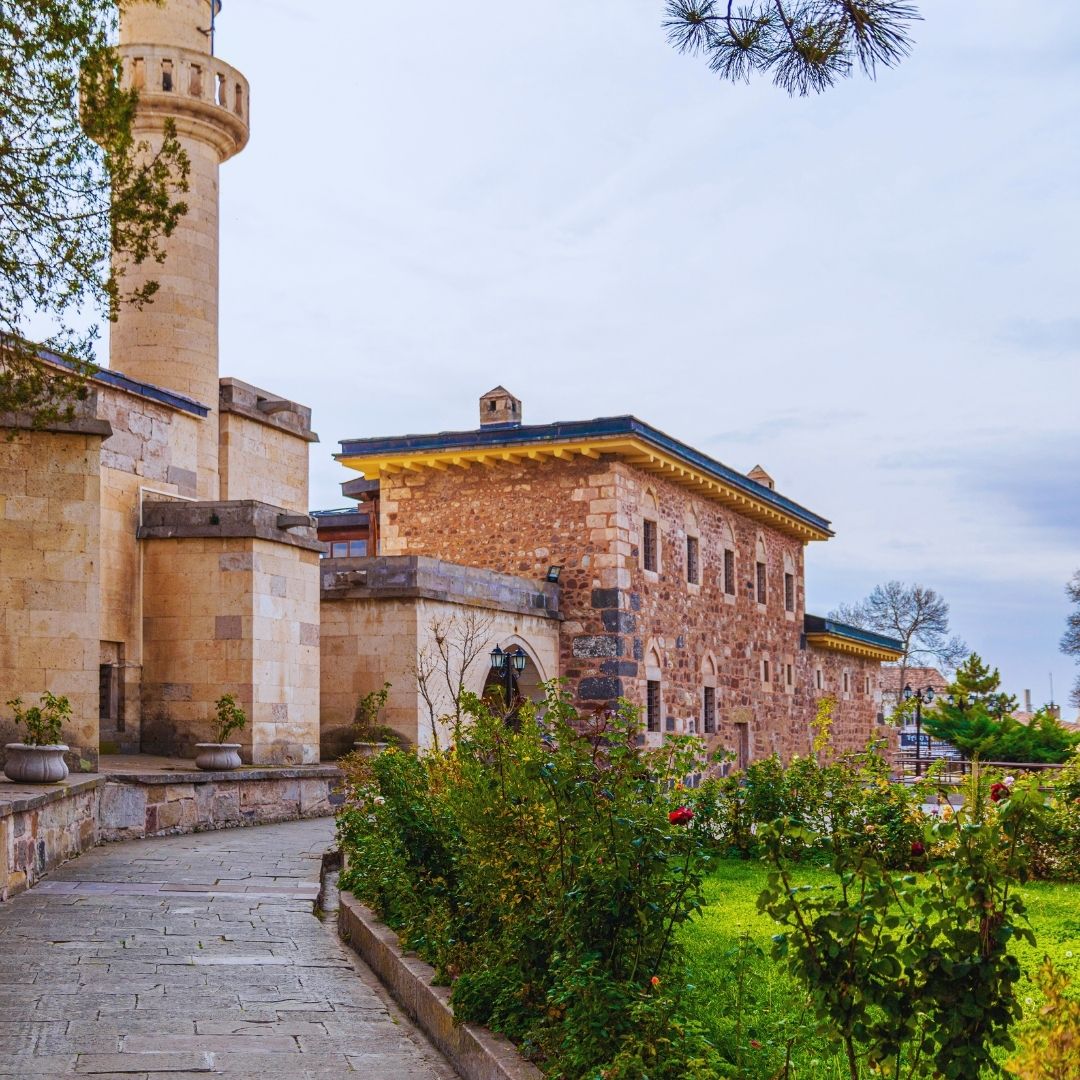
Covering an area of approximately 2,000 square meters, the caravanserai is constructed from precisely cut stones dominated by earthy tones and shades of yellow. The two-toned stones placed around the doorways lend the building a distinctive character. Notably, Saruhan is the last caravanserai built by the Seljuk sultans, a feature that sets it apart from others.
Caravanserais in the Seljuk Period
Caravanserais began to be constructed in Central Asia by the Seljuks in the 10th century. Initially envisioned as fortresses for defense, they gradually evolved into resting centers along major trade routes. Along renowned routes like the Silk Road, a caravanserai was built approximately every 30–40 kilometers—equivalent to roughly a nine-hour journey by camel.
These complexes typically featured enclosed rooms arranged around a spacious courtyard, including facilities such as kitchens, small mosques, stables, farriers’ workshops, and blacksmith shops. Established as charitable foundations (waqf) by the Seljuk sultans, these caravanserais provided free lodging and meals for travelers for up to three days. This innovative system not only promoted trade but also offered a secure haven for wayfarers.
Seljuk Architecture in Anatolia
Following the Battle of Manzikert (1071), the Seljuk Turks settled in Anatolia, developing cities and erecting new structures that would leave an enduring cultural legacy. The mosques, madrasas, caravanserais, bridges, mausoleums, and baths constructed during this period remain some of the most significant contributions to Anatolia’s architectural heritage.
Key features of Seljuk architecture include mosques with slender minarets, mausoleums crowned with pyramid or conical roofs, and intricate stone carvings. The Saruhan Caravanserai exemplifies this architectural style with its geometric stone motifs and a design that is both simple and striking.
Travel Tips
Visit at Sunset:In the evening, the Saruhan Caravanserai is bathed in warm, crimson hues as the stone walls glow under the setting sun. Spending time here at sunset is like taking a journey back through history.Watch Whirling Dervish Performances:The caravanserai hosts Whirling Dervish ceremonies, offering a unique opportunity to embark on a spiritual journey and experience the Mevlevi tradition firsthand in a historic setting. Reservations and participation details can be arranged via the Advisormapp app and our website.Explore Seljuk Architecture:Take the time to appreciate the exquisite stone craftsmanship at the entrance and the simple yet impactful interior design, and discover the subtleties of Seljuk art.Visit Nearby Historic Sites:The location of the Saruhan Caravanserai places it in close proximity to other major attractions in Cappadocia, including Avanos, Göreme, and Ürgüp. Plan a day trip to explore these additional historical treasures.Simplify Your Exploration with Advisormapp:View nearby restaurants and make instant reservations.Discover souvenir shops and enjoy exclusive discounts.Use the Advisormapp app to obtain directions to various points of interest.
Prepare to trace the footsteps of history by visiting the Saruhan Caravanserai—one of Cappadocia’s enduring historical legacies! 🚀✨
Location
Değerlendirmeler
Nearby places
More places to discover in the same area.